

Table of contents
Catering challenges in large environments
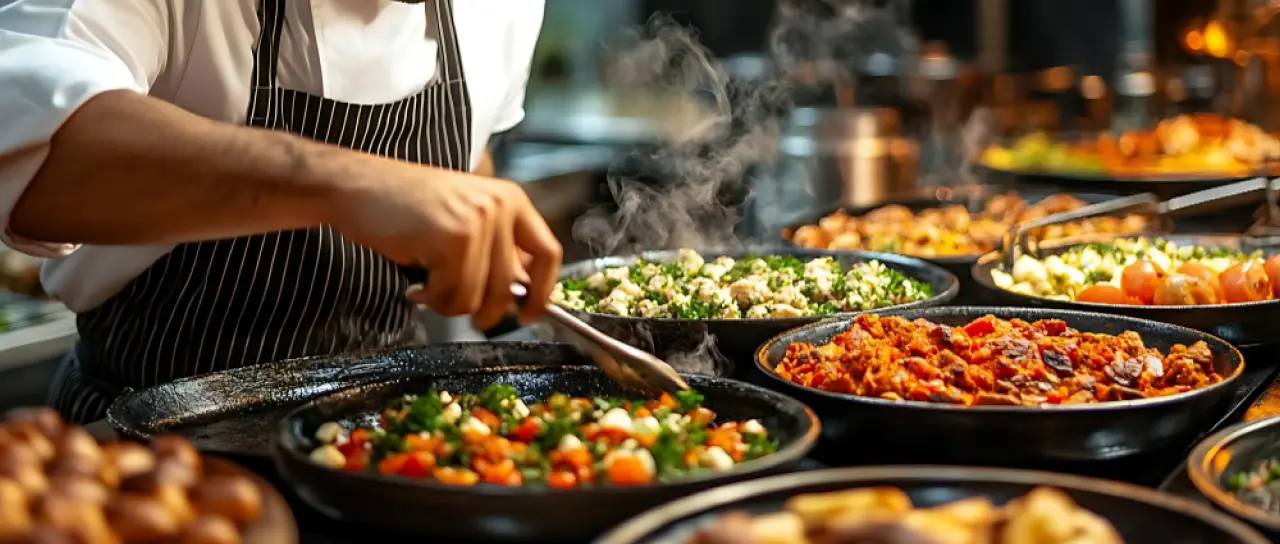
Corporate catering solutions are essential for organizations hosting large teams or events, where timely service and consistent quality are critical. Professional corporate caterers bring the expertise, infrastructure, and staffing to efficiently manage high volumes while ensuring every meal meets standards of taste, presentation, and reliability.
Maintaining high hygiene standards
Food safety is critical in large-scale catering operations, where even small lapses can have serious consequences. Professional catering teams follow strict hygiene protocols, conduct routine quality checks, and comply with food safety regulations. From ingredient sourcing to meal preparation and distribution, every step is carefully monitored to ensure meals are safe, hygienic, and consistent.
Nutrition for physically demanding work
Industrial caterers play a key role in cafeteria management for physically demanding workplaces. By providing well-balanced, nutritious meals, they help sustain energy, support muscle health, and enhance focus. Thoughtfully planned menus reduce fatigue and promote productivity, ensuring workers stay strong and efficient throughout long workdays.
Efficient operations and timely delivery
Structured workflows, trained staff, and precise planning allow professional caterers to deliver meals on time, even during peak hours or shift changes. Reliable service ensures that meal schedules align with operational needs, preventing delays and supporting uninterrupted site activities.
- Well-organized kitchen and service processes
- Accurate scheduling for peak hours and shift transitions
- Reliable logistics and delivery systems
Building workforce trust
Consistent quality, hygiene, and dependable service play a vital role in building trust between organizations and catering providers. When employees receive safe, nutritious meals on time every day, it boosts satisfaction and confidence in the service.
- Consistent food quality and portion standards
- Adherence to hygiene and safety practices
- Reliable and punctual meal service
Conclusion
E2R offers reliable and professional catering solutions for businesses in Bangalore, delivering hygienic, nutritious, and delicious meals. With expertise in managing diverse corporate needs, E2R ensures every meal supports employee well-being, productivity, and a satisfying dining experience.