Table of contents
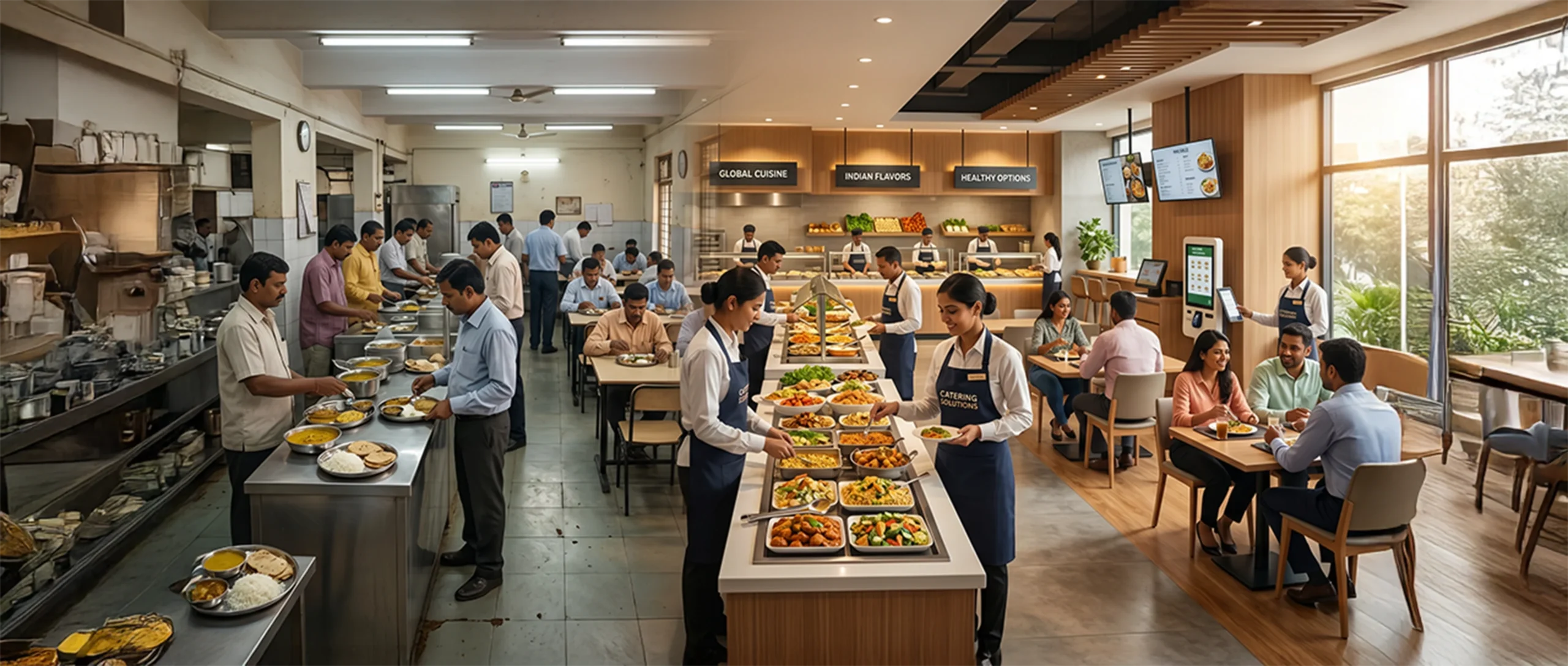
In many growing companies, the canteen starts as a small employee facility. A few months later, HR teams are chasing vendors, handling food complaints, replacing cooks, and checking hygiene issues instead of focusing on people and culture. This is exactly why many businesses are now exploring cafeteria management services in Bangalore. But is outsourcing really better than running a canteen internally?
This blog breaks down both models to help you make the right decision for your workplace.
The In-House Canteen Model - How It Works
An in-house canteen means the company handles everything on its own. The business hires kitchen staff, works directly with food vendors, purchases ingredients, manages equipment, checks cleanliness, and handles employee complaints internally.
The company also takes care of food safety requirements and daily operations. Some organisations prefer this because they want direct control over food quality and menu planning. For some companies, this works. However, as employee strength increases, cafeteria operations often become more difficult to scale efficiently.
The Real Problems With Running a Canteen In-House
What starts as a simple employee facility slowly becomes harder to manage. HR and admin teams spend hours solving vendor delays, food complaints, and staffing issues. If a cook does not show up or a vendor backs out at the last minute, the company has to fix it immediately.
Food hygiene checks and FSSAI requirements need constant attention. Costs also keep changing, raw materials become expensive, staff leave frequently, and kitchen equipment needs repairs. The canteen starts as a facility and slowly becomes a full-time job.
What Cafeteria Outsourcing Actually Means
Many people assume outsourcing means handing everything to one caterer and hoping things work out. In reality, cafeteria management works differently. A cafeteria management company acts as a middle layer between your business and multiple food vendors.
They manage operations, monitor food quality, handle complaints, and coordinate deliveries. For factories and production units looking for industrial canteen services in Bangalore, this model helps reduce operational pressure. This is exactly how E2R operates – as a food aggregator, not a caterer.
Side-by-Side Comparison
Companies often struggle to understand the real difference between an in-house canteen and outsourced cafeteria management. The comparison below gives a simple view of what changes in areas like vendor management, complaints, compliance, costs, and scalability.
What to Expect in the First 30 Days of Outsourcing Your Cafeteria
The first month is usually focused on understanding how your workplace functions. A vendor assessment is done to study employee count, meal timings, and food preferences. Menus are then planned based on shift patterns, dietary choices, and daily demand.
A dedicated point of contact is assigned so your HR or admin team always has someone to reach out to. Within the first two weeks, a quality audit is conducted to review food standards and operations. From day one, a clear complaint resolution process is also put in place so employee concerns are tracked and addressed quickly.
So Which Model Is Right for Your Company?
There is no single answer for every business. A small office with under 50 employees and simple meal requirements may do fine with an internal setup or a local tiffin provider.
But once a company grows beyond 100 employees, runs multiple shifts, or operates in a factory environment, food operations become more demanding.
At that stage, outsourcing usually becomes the practical option. The biggest advantage is not just the food itself. You are moving the responsibility of managing the entire problem to someone else.
Conclusion
Choosing between an in-house canteen and outsourcing is not only about food service or cost. The bigger question is who handles the pressure when issues come up. From vendor delays to employee complaints and compliance checks, managing a cafeteria takes time and constant attention. This is why many companies are moving toward cafeteria outsourcing Bangalore businesses can rely on for structured day-to-day management.
E2R DFAC works as a dedicated food aggregator for companies across Bangalore managing vendors, ensuring quality, and keeping your cafeteria running without you having to think about it.
- Is your HR team still running your canteen?
Hand it over to E2R DFAC. Focus on your people, not the pantry.
Vendor delays, food complaints, FSSAI checks — your team shouldn’t be dealing with any of this. Let E2R take it off your plate completely.
Takes 2 minutes to fill the form · Our team responds within 24 hours